Every EC2 Instance You’ve Ever Launched Uses 60-Year-Old Concepts
Cloud computing feels modern. AWS launched EC2 in 2006. Azure went general availability in 2010. Kubernetes hit 1.0 in 2015. If you started your career in the last decade, cloud might feel like it’s always existed.
It hasn’t. But the concepts behind it have existed since the 1960s. Time-sharing, virtualisation, utility computing — the ideas that power every hyperscaler were invented by researchers at MIT and IBM when computers filled entire rooms and cost more than houses. The technology has scaled by orders of magnitude. The fundamental principles haven’t changed at all.
Understanding this history does two things. First, it makes you a better cloud engineer because you understand why things work the way they do, not just how to click through the console. Second, it reveals an uncomfortable truth: the current model of three companies controlling most of the world’s compute is a temporary centralisation of something that was originally designed to be shared, open, and distributed. Self-hosting isn’t a regression — it’s closer to the original vision.
Career Context: Senior cloud architects are expected to understand not just current platforms but the architectural lineage behind them. When an interviewer asks “why does EC2 work the way it does?” or “what problem does containerisation actually solve?”, the answer is in this history. It’s also the context that separates someone who can use cloud from someone who can design cloud architecture.
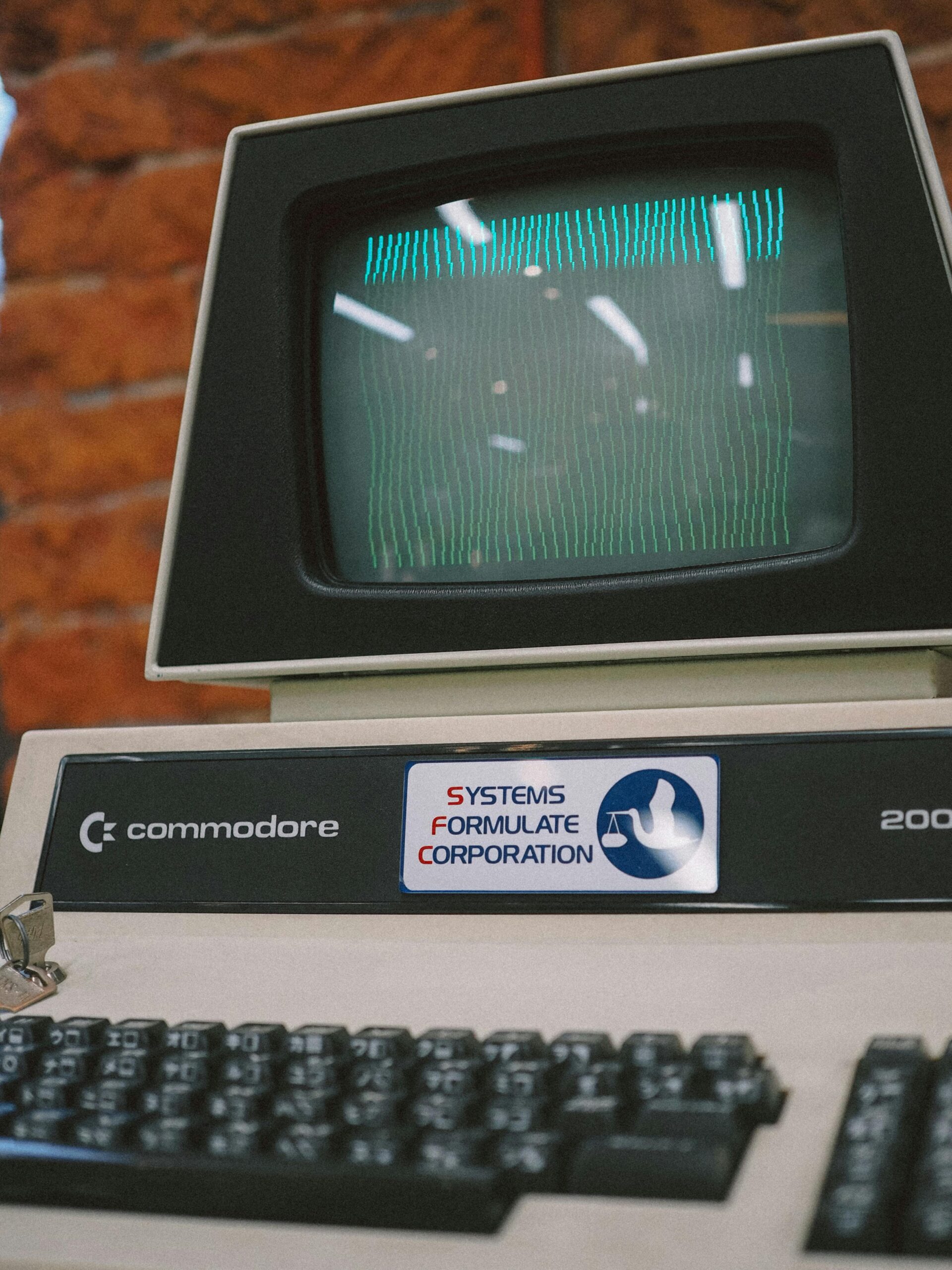
1961: Computing as a Utility
In 1961, John McCarthy — the computer scientist who coined the term “artificial intelligence” — gave a speech at MIT’s centennial celebration. He predicted that computing would one day be organised as a public utility, the same way electricity and water are delivered. You wouldn’t own a computer any more than you own a power station. You’d just use computing when you needed it and pay for what you consumed.
It took 45 years for AWS to prove him right. But the work started immediately.
CTSS: The Compatible Time-Sharing System (1961)
MIT’s computation centre had a problem. They had an IBM 7094 mainframe — one of the most powerful computers in the world at the time — and it could only run one program at a time. Researchers would submit jobs on punch cards, wait hours or days for their turn, and get their results back. The machine was phenomenally expensive and sat idle between jobs.
Fernando Corbató and his team at MIT built CTSS — the Compatible Time-Sharing System. Instead of one user at a time, CTSS rapidly switched between multiple users, giving each one the illusion of having the entire machine to themselves. A researcher at a terminal could type a command, get a response, and interact with the computer in real time. Multiple users, simultaneously, on one machine.
This was cloud computing. Not branded, not marketed, not running on commodity hardware in a datacentre — but conceptually identical. Multiple users sharing a pool of compute resources, each isolated from the others, each paying (in this case, through grant funding) for what they used. The idea that a computing resource doesn’t need to be owned to be used — that’s the entire foundation of cloud.
Project MAC and Multics (1963-1969)
DARPA funded MIT’s Project MAC (Multiple Access Computer, or Machine-Aided Cognition — they never quite settled on the acronym) to push time-sharing further. This led to Multics — the Multiplexed Information and Computing Service — developed jointly by MIT, Bell Labs, and General Electric.
Multics was wildly ambitious. It aimed to create a computing utility that would serve an entire community of users, with robust security, a hierarchical file system, dynamic linking, and hot-swappable hardware. It was supposed to be the operating system that made McCarthy’s vision real.
Commercially, Multics was a failure. It was over-engineered, over-budget, and late. Bell Labs pulled out of the project in 1969.
But its influence was enormous. Two Bell Labs researchers who’d worked on Multics — Ken Thompson and Dennis Ritchie — took the concepts they’d learned and built something simpler. They called it Unix. And Unix, in various forms, now runs virtually every server on the internet, every Android phone, every Mac, and most of the cloud infrastructure on the planet.
Multics failed as a product. As a set of ideas, it succeeded beyond anything its creators imagined.
Lineage: Multics (1969) → Unix (1971) → BSD (1977) → Linux (1991) → every cloud server you’ve ever touched. The next time you SSH into a Linux VM on AWS, you’re using a direct descendant of an operating system designed at MIT to share a mainframe among researchers. Same concept, different scale.
IBM and the Invention of Virtualisation
While MIT was building time-sharing operating systems, IBM was solving the same problem from a different angle: virtualisation.
In 1966, IBM’s Cambridge Scientific Center built CP-40 — a system that could create multiple virtual machines on a single physical IBM System/360 mainframe. Each virtual machine was a complete, isolated instance of the hardware. Users didn’t share an operating system — each one got their own entire machine, virtually.
This was a fundamentally different approach from time-sharing. Time-sharing systems like CTSS shared one operating system among many users. CP-40 gave each user their own operating system running on virtual hardware. If your virtual machine crashed, nobody else was affected. The isolation was complete.
CP-40 led to CP-67, then to VM/370 in 1972 — the first commercially available hypervisor. IBM sold it for decades. Mainframe customers could run multiple operating systems simultaneously on a single machine, each in its own virtual machine, each completely isolated.
Sound familiar? This is exactly what VMware does. It’s exactly what Hyper-V does. It’s exactly what Proxmox does. It’s exactly what EC2 does. The concept hasn’t changed since 1966 — a hypervisor creates virtual hardware, you install an operating system on it, and the virtual machine thinks it’s running on real hardware.
For thirty years, virtualisation was an IBM mainframe thing. Expensive. Enterprise. Not something you’d encounter outside a large datacentre. That changed in 1998.
The Timeline: From Mainframes to Hyperscalers
| Year | Milestone | Significance |
|---|---|---|
| 1961 | CTSS (MIT) | First time-sharing system — multiple users share one computer |
| 1964 | Multics begins (MIT/Bell/GE) | Utility computing vision — ambitious, over-engineered, hugely influential |
| 1966 | CP-40 (IBM) | First virtual machine system — multiple OS instances on one machine |
| 1969 | Unix (Bell Labs) | Multics simplified — becomes the foundation of modern servers |
| 1972 | VM/370 (IBM) | First commercial hypervisor — virtualisation as a product |
| 1991 | Linux kernel released | Open-source Unix — eventually runs most of the cloud |
| 1998 | VMware founded | Virtualisation on commodity x86 hardware — the inflection point |
| 2003 | Xen hypervisor | Open-source virtualisation — Cambridge University project |
| 2006 | AWS EC2 launches | Virtual machines as a service — the cloud era begins |
| 2008 | Proxmox VE 1.0 | Open-source virtualisation platform for homelabs and SMBs |
| 2010 | Azure GA / OpenStack | Microsoft enters cloud. NASA + Rackspace open-source their cloud platform |
| 2013 | Docker | Containers go mainstream — lighter than VMs, faster to deploy |
| 2014 | Kubernetes | Google open-sources their container orchestration (based on internal Borg system) |
| 2015 | Kubernetes 1.0 | Production-ready container orchestration — changes everything |
VMware: Virtualisation Leaves the Mainframe
For three decades, virtualisation was something you did on IBM mainframes that cost more than houses. Then, in 1998, VMware was founded with a radical premise: virtualise x86 hardware. Run virtual machines on the same commodity servers that every company already owned.
This was the inflection point. Suddenly, a company didn’t need to buy 10 physical servers for 10 workloads. They could buy 2 beefy servers, run VMware’s hypervisor, and create 10 virtual machines. Server utilisation went from 10-15% to 60-80%. The economics were transformative.
VMware’s vSphere/ESXi became the standard in enterprise datacentres throughout the 2000s. If you worked in IT infrastructure between 2005 and 2020, you used VMware. It was practically mandatory.
Then Broadcom acquired VMware in 2023 and changed the licensing. Prices skyrocketed. Enterprise customers who’d been locked in for decades started looking for alternatives. Proxmox, which had been quietly building an open-source virtualisation platform since 2008, suddenly had a massive audience. The VMware exodus is still happening in 2026, and it’s why learning Proxmox is one of the most career-relevant things you can do right now.
AWS: Selling Spare Capacity
The story of AWS is, at its core, a story about spare capacity. Amazon built massive computing infrastructure to handle peak shopping traffic — Black Friday, Prime Day. For the other 360 days of the year, most of that capacity sat idle.
Jeff Bezos’s insight was that this spare capacity could be sold. In 2006, AWS launched Elastic Compute Cloud (EC2), offering virtual machines by the hour. No upfront cost. No long-term commitment. Spin up a server in minutes, use it for an hour, shut it down. Pay only for what you use.
This was John McCarthy’s 1961 prediction made real. Computing as a utility. Not owned, but consumed. And it used the same fundamental technology IBM invented in 1966 — a hypervisor creating virtual machines on physical hardware. AWS’s initial hypervisor was a modified version of Xen, the open-source project from Cambridge.
Microsoft followed with Azure (preview 2008, GA 2010). Google launched Google Cloud Platform in 2008. By 2015, the cloud market was dominated by these three — AWS with roughly 30% market share, Azure around 20%, and Google Cloud around 10%.
OpenStack: The Open-Source Cloud That Almost Was
In 2010, NASA and Rackspace open-sourced their cloud platforms — NASA’s Nebula and Rackspace’s Cloud Files — merging them into OpenStack. The promise was compelling: an open-source alternative to AWS that you could run on your own hardware. Your own cloud, with no vendor lock-in.
OpenStack gained enormous momentum. Major companies contributed — IBM, HP, Red Hat, Intel, Canonical. For several years, it looked like the future of private cloud.
In practice, OpenStack proved incredibly complex to deploy and operate. It had hundreds of configuration options, dozens of interacting services, and required significant expertise to maintain. Companies that tried to run their own OpenStack clouds often found that the operational overhead eliminated the cost savings. Many migrated back to AWS or Azure.
OpenStack survives today in large telcos, research institutions, and some enterprises with the engineering depth to operate it. But it never achieved its goal of becoming the Linux of cloud computing — accessible, ubiquitous, and easy to run.
Containers: The Next Abstraction
Virtual machines solved the server utilisation problem, but they carried overhead. Each VM runs its own operating system — its own kernel, its own system services, its own memory footprint. Running 10 VMs means running 10 copies of Linux (or Windows), even if they’re all running the same application.
Containers solved this by sharing the host’s kernel. A container includes only the application and its dependencies — not an entire operating system. This makes containers smaller (megabytes instead of gigabytes), faster to start (seconds instead of minutes), and more efficient with resources.
The concept isn’t new — Linux had kernel-level isolation mechanisms (cgroups, namespaces) since 2008. But Docker, launched in 2013, made containers accessible. A Dockerfile describes your application’s environment. docker build packages it. docker run starts it. Anyone with Docker installed can run your container and get identical results. “Works on my machine” became “works on every machine.”
Docker made containers easy. Kubernetes, released by Google in 2014, made them manageable at scale. Google had been running containers internally for over a decade using a system called Borg. Kubernetes (Greek for “helmsman”) was Borg’s concepts made public — container scheduling, service discovery, self-healing, rolling deployments, declarative configuration.
Today, Kubernetes is the de facto standard for container orchestration. EKS (AWS), AKS (Azure), GKE (Google Cloud) are all managed Kubernetes. If you’re building anything at scale in 2026, you’re probably running it on Kubernetes. And if you want to learn it on your own hardware, K3s on a Raspberry Pi teaches the same concepts without the cloud bill.
The Abstraction Stack: Physical servers → Virtual machines (hypervisor abstracts hardware) → Containers (Docker abstracts the OS) → Serverless (cloud abstracts the container). Each layer trades control for convenience. Understanding all layers means you can choose the right one for each workload — and you can debug when the abstractions leak.
The Centralisation Aberration
Here’s the part that rarely gets discussed in cloud marketing: the original vision was distributed computing. Time-sharing was about sharing resources across a community. The internet was designed with no central point of control. Open-source software was built to be run by anyone, anywhere.
The current reality — where three companies control the majority of the world’s cloud compute, where a single region outage takes down half the internet’s services, where your data lives on hardware you don’t own in a country whose laws you didn’t agree to — is not the natural evolution of these ideas. It’s a centralisation driven by economics and convenience, not by technical necessity.
Every tool you need to run your own infrastructure exists, is open source, and runs on hardware you can buy for a few hundred pounds:
- Hypervisor: Proxmox VE — free, open source, more than capable
- Containers: Docker — the same containerisation technology that runs in every cloud
- Orchestration: K3s — Kubernetes on commodity hardware
- Automation: n8n — self-hosted workflow automation
- Monitoring: Uptime Kuma + Grafana + Prometheus — production-grade observability
- Storage: Nextcloud, MinIO — your files, your hardware
Self-hosting isn’t a step backwards from the cloud. It’s a return to the original vision — computing as a resource you control, running on infrastructure you own, using open technology that anyone can audit and modify. The hyperscalers are the deviation. The homelab is the tradition.
“Explain the difference between virtualisation and containerisation.”
“Virtualisation, pioneered by IBM in the 1960s and popularised by VMware in the 2000s, creates complete virtual machines — each with its own operating system, kernel, and allocated resources. The hypervisor abstracts the hardware. Containerisation, popularised by Docker in 2013, shares the host’s kernel and isolates only the application and its dependencies. Containers are lighter, faster to start, and more resource-efficient, but they offer less isolation than VMs. In practice, you often use both — VMs for strong isolation between tenants, containers for efficient application packaging within a trusted environment.”
Starting with the historical context (“pioneered by IBM in the 1960s”) signals architectural depth. Ending with “in practice, you use both” shows pragmatism.
“What was the biggest architectural change cloud computing introduced?”
“The shift from capital expenditure to operational expenditure — from buying hardware to renting it by the hour. But architecturally, the underlying technology isn’t new. Cloud VMs use the same hypervisor concepts IBM developed in 1966. What changed was the business model and the API layer — the ability to programmatically provision infrastructure. Infrastructure as Code isn’t possible when you’re racking physical servers. It becomes natural when provisioning is an API call.”
“Why would a company choose to self-host rather than use cloud?”
“Data sovereignty is the most common driver — regulatory requirements about where data is stored and processed. Cost is the second — at scale, cloud compute is significantly more expensive than owned hardware. Predictability is the third — a fixed monthly cost for owned infrastructure versus variable cloud bills that can spike unpredictably. And control — when you own the infrastructure, you control the upgrade cycles, the security patches, and the configuration. Cloud is excellent for variable workloads, rapid scaling, and reducing time to market. Self-hosting is excellent for stable workloads, regulatory compliance, and long-term cost control. Most mature organisations use both.”
This answer shows you can argue both sides. Interviewers testing for cloud skills will respect an answer that acknowledges trade-offs rather than blindly advocating for one approach.
Career Application
On your CV:
- “Designed and managed hybrid infrastructure spanning on-premises Proxmox cluster and Azure cloud, optimising workload placement based on cost and compliance requirements”
- “Migrated 40+ VMs from VMware to Proxmox VE, reducing licensing costs by 85% while maintaining HA capability”
- “Containerised legacy applications using Docker and deployed to Kubernetes (K3s) cluster with zero-downtime rolling updates”
In your homelab:
- Run Proxmox — you’re learning the same hypervisor concepts IBM invented, using open-source tools that compete directly with VMware and cloud.
- Run Docker alongside VMs — understanding both virtualisation and containerisation makes you more versatile than engineers who only know one.
- Try K3s on a Pi cluster — multi-node Kubernetes on hardware you own, learning the orchestration platform that runs most of the cloud.
- Build something that spans both — a homelab with local services and one cloud VM teaches you hybrid architecture, which is what most real organisations run.
The career opportunity: The VMware-to-Proxmox migration wave is creating demand for engineers who understand virtualisation deeply, not just one vendor’s products. The rise of hybrid and multi-cloud is creating demand for engineers who can architect across environments. Understanding the history — why virtualisation exists, why containers evolved, why cloud economics work the way they do — makes you the engineer who designs solutions rather than the one who follows vendor prescriptions.
Series Complete
- Part 1: From ARPANET to Your Router — The physical internet and how data travels.
- Part 2: How DNS Actually Works — The system that turns names into numbers.
- Part 3: What Happens When You Type a URL — The full request journey.
- Part 4: The Birth of Cloud Computing — You are here.
The internet, DNS, HTTP, and cloud computing. Four articles covering the foundations that everything else in IT is built on. Every homelab project, every cloud deployment, every troubleshooting session draws on these fundamentals.
Where to go next:
- How to Build Your First Homelab in 2026 — Put this knowledge into practice
- Raspberry Pi 5 Homelab: 10 Projects — Start building on real hardware
- Best Mini PCs for Homelabs — Hardware that runs Proxmox beautifully
- Why Self-Host in 2026 — The sovereignty case for owning your infrastructure
The technology changes. The principles don’t. Understand the principles, and you’ll navigate whatever comes next.
RTFM Apparel · printed in the UK


ReadTheManual is run, written and curated by Eric Lonsdale.
Eric has over 20 years of professional experience in IT infrastructure, cloud architecture, and cybersecurity, but started with PCs long before that.
He built his first machine from parts bought off tables at the local college campus, hoping they worked. He learned on BBC Micros and Atari units in the early 90s, and has built almost every PC he’s used between 1995 and now.
From helpdesk to infrastructure architect, Eric has worked across enterprise datacentres, Azure environments, and security operations. He’s managed teams, trained engineers, and spent two decades solving the problems this site teaches you to solve.
ReadTheManual exists because Eric believes the best way to learn IT is to build things, break things, and actually read the manual. Every guide on this site runs on infrastructure he owns and maintains.
Enjoyed this guide?
New articles on Linux, homelab, cloud, and automation every 2 days. No spam, unsubscribe anytime.