From Homelab Tinkerer to Hired Sysadmin
Every infrastructure job posting says “Linux experience required.” But what does that actually mean? Which commands matter? What do interviewers really test?
I’ve been on both sides of the technical interview. This series covers the Linux fundamentals that actually get asked – not obscure trivia, but practical command-line skills that demonstrate you can work in production environments.
Whether you’re moving from helpdesk to sysadmin, prepping for your first infrastructure role, or filling gaps before a DevOps interview, these 17 guides (the 12-part core series plus five quick-reference guides) give you the commands, context, and career positioning to land roles paying £35-55k.
The Series
Each article follows the same structure: career context, practical examples, interview questions, and troubleshooting. Start from the beginning or jump to what you need.
Foundation Skills
Linux Commands That Get You Hired
The 30 commands interviewers actually test. Navigation, file operations, and the confidence that lands offers.
Mastering systemctl: Service Management
Start, stop, troubleshoot. The command you’ll use fifty times a day in any infrastructure role.
apt Package Management Essentials
Installing, updating, removing software. Critical on Ubuntu and Debian servers.
Linux File Permissions Deep Dive
The interview question everyone gets wrong. chmod, chown, and why 777 is never the answer.
Networking & Security
Network Troubleshooting Commands
ping, traceroute, netstat, ss. Diagnose connectivity issues before escalating to senior engineers.
Understanding sudo and Privilege Escalation
Security-minded administration. Why “just sudo it” makes senior admins cringe.
Daily Operations
Linux Directory Navigation Essentials
cd, ls, pwd, find. The commands you’ll use every single day without thinking.
Process Management: ps, top, htop, kill
What’s running? What’s consuming resources? How do you stop it? Production essentials.
Linux Log Files and journalctl
Finding out what went wrong. The skill that separates guessers from troubleshooters.
Advanced Operations
SSH Essentials: Remote Administration
Keys, config, tunnels. Secure remote access for distributed infrastructure.
Text Processing: grep, sed, awk
Parse logs, extract data, transform output. The power tools that impress interviewers.
Disk Management: df, du, lsblk, mount
Capacity planning and storage troubleshooting. Prevent the 2 AM “disk full” alerts.
Quick Reference Guides (alongside the 12-part series)
Check Your Ubuntu/Linux Version (5 Methods)
Five commands to identify your distro, kernel, and architecture. The first thing you do on any unfamiliar server.
List Users in Linux (and Manage Accounts)
Find who has access, check groups, audit logins. Essential for security and compliance.
Remove Files and Directories (rm, rmdir, find)
Safe deletion, dangerous deletion, and why you should always preview before you delete.
File Permissions: chmod, chown, and the Permission Calculator
The interview question everyone gets wrong. Octal notation, ownership, and common permission sets.
SSH Configuration and Security Hardening
Keys, port changes, client config, tunnelling. The foundation of server security.
Who This Series Is For
- Helpdesk/Support moving to infrastructure roles
- Windows admins adding Linux to their toolkit
- Bootcamp grads filling practical gaps
- Career changers entering tech via sysadmin track
- Homelab enthusiasts translating hobby into career
The Career Context
These aren’t just commands – they’re interview talking points. Each guide explains not just how to use the command, but how to discuss it in interviews, what scenarios demonstrate real experience, and how to position your homelab work as production-relevant.
Junior sysadmin roles in the UK typically pay £30-40k. With solid Linux fundamentals and the ability to articulate your experience, you’re looking at £40-55k for mid-level infrastructure positions. That’s the difference these skills make.

Start Here
New to Linux? Start with Linux Commands That Get You Hired for the foundation.
Prepping for interviews? Jump to the specific topics you’ll be asked about – file permissions, systemctl, and log analysis come up in nearly every infrastructure interview.
Already comfortable? The text processing and SSH guides cover advanced skills that separate candidates.
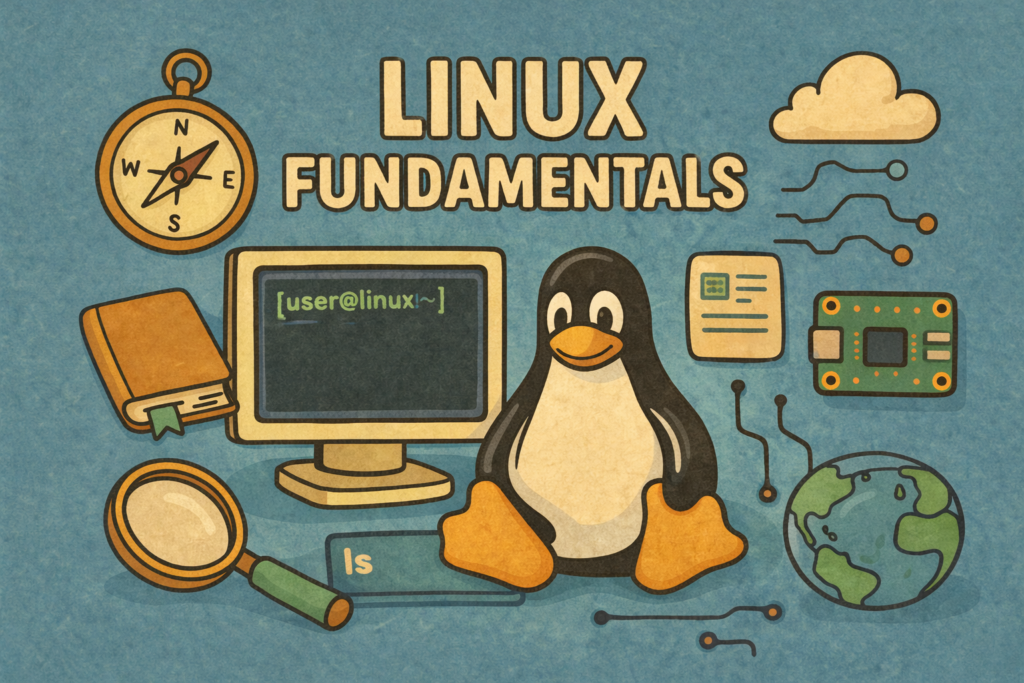
Linux Fundamentals Series – series hub: 12 core parts plus 5 quick-reference guides
Start with Part 1: Linux Commands That Get You Hired
Stay in the Loop
New Linux guides, homelab tutorials, and career content every 2 days. No spam, unsubscribe anytime.
RTFM Apparel · printed in the UK


ReadTheManual is run, written and curated by Eric Lonsdale.
Eric has over 20 years of professional experience in IT infrastructure, cloud architecture, and cybersecurity, but started with PCs long before that.
He built his first machine from parts bought off tables at the local college campus, hoping they worked. He learned on BBC Micros and Atari units in the early 90s, and has built almost every PC he’s used between 1995 and now.
From helpdesk to infrastructure architect, Eric has worked across enterprise datacentres, Azure environments, and security operations. He’s managed teams, trained engineers, and spent two decades solving the problems this site teaches you to solve.
ReadTheManual exists because Eric believes the best way to learn IT is to build things, break things, and actually read the manual. Every guide on this site runs on infrastructure he owns and maintains.