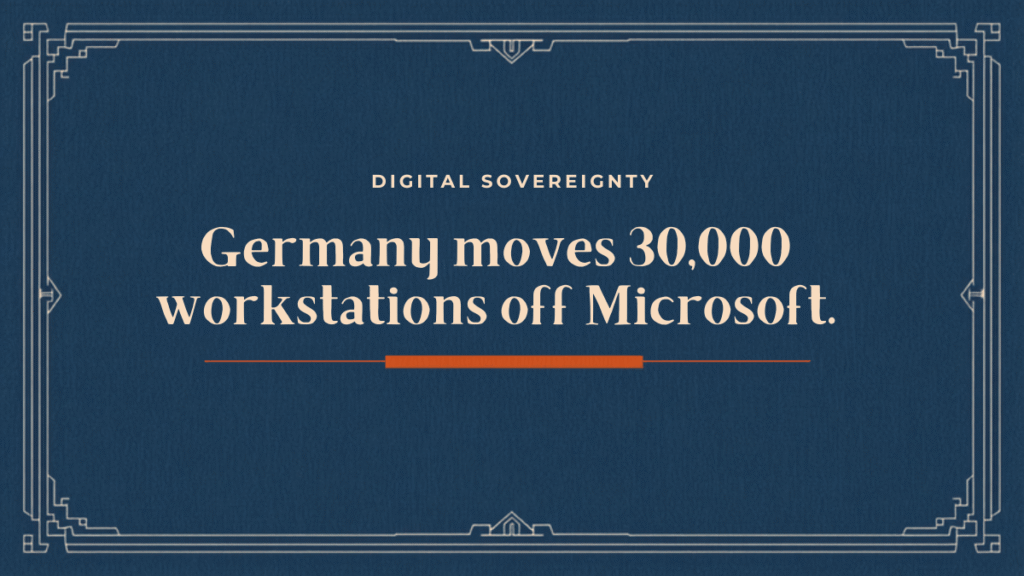
In April 2026, the European Commission awarded a 180 million euro sovereign cloud contract to four European providers: Post Telecom (with partners CleverCloud and OVHcloud), StackIT, Scaleway, and Proximus (partnered with S3NS, Clarence, and Mistral). The contracts run for six years. US hyperscalers were not invited.
This is not symbolic. According to Gartner, European spending on sovereign cloud infrastructure is rising from 6.7 billion dollars in 2025 to over 23.1 billion dollars by 2027. That is a threefold increase in two years.
Something fundamental is shifting in how Europe thinks about cloud infrastructure. And the UK, sitting outside the EU, has not figured out where it fits.
What the EU Is Building
The Commission developed a Cloud Sovereignty Framework that measures sovereignty across eight objectives. It introduces Sovereignty Effectiveness Assurance Levels, from SEAL-0 (no sovereignty measures) to SEAL-4 (full EU supply chain, from chips to software). Providers in the 180 million euro tender needed to reach at least SEAL-2, which requires data sovereignty compliance with EU law without needing additional technical measures from the customer.
The four contracts were deliberately split across multiple providers to avoid lock-in. This is a procurement approach that treats vendor concentration as a structural risk, not just a negotiating inconvenience.
The providers themselves are worth noting. OVHcloud, Scaleway, StackIT. These are not startups. They are established European infrastructure companies with real data centres and production workloads.
The Pricing Reality
There is a persistent assumption that European cloud providers cannot compete with US hyperscalers on price. The data says otherwise.
Independent benchmarks from early 2026 show that Hetzner delivers roughly 14 times the compute value per unit cost compared to AWS. A Hetzner CPX32 instance costs 16.36 euros per month versus 162.88 euros for an equivalent AWS instance, with 71% better multi-core performance.
Scaleway delivers approximately double the single-core performance of equivalent hyperscaler instances at roughly a quarter of the price. Egress costs, which are notoriously expensive on AWS, are either included or negligible on most European providers.
Organisations migrating from hyperscale environments to European cloud providers are reporting cost reductions between 70% and 90% on equivalent workloads. The price premium for sovereignty does not exist. In many cases, sovereignty is actually cheaper.
Where the UK Stands
The honest answer: nowhere specific.
The UK Government does not have an overarching digital sovereignty policy. The June 2025 Modern Industrial Strategy mentions “sovereign capability” in key technologies, and there is a Sovereign AI Unit with 500 million pounds in funding, but there is no equivalent to the EU’s Cloud Sovereignty Framework.
A report by the Open Rights Group in April 2026 warned of a “crisis of digital dependency.” Research shows that 52% of UK business leaders are actively looking to repatriate data to UK shores. An early day motion calling for a UK digital sovereignty strategy was tabled in Parliament.
But policy has not caught up with sentiment. The UK’s “cloud-first” strategy, adopted in 2013, made no distinction between UK-sovereign cloud and US-headquartered cloud. Thirteen years later, 70% of European cloud workloads still run on US-controlled infrastructure. The UK figure is likely higher.
Post-Brexit, the UK sits in an awkward position. Outside the EU’s regulatory framework, but still subject to the same jurisdictional risks from the CLOUD Act. Without EU membership, UK organisations are not eligible for EU sovereign cloud contracts. Without a UK sovereign cloud strategy, there is no domestic equivalent.
The Opportunity
Here is what the spending forecast means in practical terms. 23.1 billion dollars by 2027 in sovereign cloud infrastructure means thousands of jobs deploying, managing, and securing infrastructure that is not AWS, Azure, or GCP.
That means demand for people who understand:
- Proxmox for virtualisation instead of VMware (now Broadcom)
- Nextcloud for collaboration instead of SharePoint
- WireGuard for networking instead of proprietary VPNs
- Grafana and Prometheus for monitoring instead of Datadog
- Self-hosted CI/CD instead of GitHub Actions
These are not obscure tools. They are production-grade platforms used by the providers the EU just awarded 180 million euros to. And they are the same tools you can learn in a homelab.
Try It Yourself
The sovereign cloud market is growing at a rate that will outpace the talent pipeline. Building these skills now puts you ahead of that curve, whether you end up working for a European cloud provider, a government agency, or an enterprise that decides to bring infrastructure in-house.
- Homelab Guides 2026 covers the full stack from hardware to services, exactly the environment where you learn sovereign infrastructure skills.
- How to Install Proxmox VE walks through setting up the same virtualisation platform used by sovereign cloud providers across Europe.
- Why Self-Host in 2026? lays out the risk assessment framework that is driving this entire shift.
- Digital Sovereignty: Self-Hosting for Cloud Professionals covers the strategic picture and how self-hosting skills translate to professional infrastructure roles.
- Project NOMAD: Self-Hosted Internet in a Box takes it further: a fully portable, self-contained sovereign infrastructure stack you can carry in a backpack.
23.1 billion dollars. Four European providers just got 180 million euros. The sovereign cloud market is not coming. It is here. The question is whether your skill set is ready for it.
Sources: European Commission, TechRadar, The Register, Fermigier
RTFM Apparel · printed in the UK


ReadTheManual is run, written and curated by Eric Lonsdale.
Eric has over 20 years of professional experience in IT infrastructure, cloud architecture, and cybersecurity, but started with PCs long before that.
He built his first machine from parts bought off tables at the local college campus, hoping they worked. He learned on BBC Micros and Atari units in the early 90s, and has built almost every PC he’s used between 1995 and now.
From helpdesk to infrastructure architect, Eric has worked across enterprise datacentres, Azure environments, and security operations. He’s managed teams, trained engineers, and spent two decades solving the problems this site teaches you to solve.
ReadTheManual exists because Eric believes the best way to learn IT is to build things, break things, and actually read the manual. Every guide on this site runs on infrastructure he owns and maintains.
Enjoyed this guide?
New articles on Linux, homelab, cloud, and automation every 2 days. No spam, unsubscribe anytime.