In Part 1, we covered the practical side: how to present your homelab on your CV, what to say in interviews, and which projects map to which roles.
This is the bigger picture. Why it matters more now than it ever has. And why the engineers who keep building will be the ones who stay irreplaceable.
Career Value: The IT skills landscape is shifting faster than at any point in the last 20 years. AI is automating entry-level tasks, cloud abstraction is hiding fundamentals, and the training pipeline that used to produce infrastructure engineers has largely shut down. This article maps the shift and what to do about it.

The Barriers Are Gone. The Excuses Are Too.
It is 2026. The knowledge is not gated the way it used to be.
Ten years ago, learning enterprise infrastructure meant buying expensive vendor courses, paying for software licences, and hoping your employer would fund your development.
The vendors controlled the training pipeline. If you did not have a company willing to invest in you, you were stuck.
That world is gone.
Linux is free. Docker is free. Proxmox is free. Wazuh, Grafana, Ansible, Kubernetes, Home Assistant, Ollama, n8n. All free.
The enterprise-grade software that used to cost tens of thousands in licensing is available to anyone willing to install it.
The hardware barrier has collapsed too
You do not need a £6,000 gaming rig or a full 42U rack. That is ludicrously expensive and completely unnecessary.
A second-hand mini PC from eBay for £50-80 runs everything in this article.
A Raspberry Pi for £35 teaches you Linux, Docker, networking, and monitoring.
Ewaste from offices upgrading their fleet is often free if you know where to ask.
The Dell R210 I ran before moving to mini PCs cost less than a round of drinks.
Nobody is expecting you to build a datacentre in your spare bedroom. A single device running a few services is enough to learn, enough to put on your CV, and enough to have a conversation about in an interview.
If you want to see what is possible on a budget, our Essential Stack page covers the hardware and tools we actually use and recommend.
Entry-Level IT Has Changed
It used to be enough to be willing, personable, and able to follow a script.
Answer the phone, log the ticket, follow the knowledge base article, escalate if stuck.
That was helpdesk. That was the way in.
AI can now do all of that. Faster, cheaper, and 24 hours a day.
We are literally building AI triage agents that categorise tickets, suggest resolutions, and respond to users without a human touching it. The “answer the phone and add a name to the service desk” role is not coming back in the same form.
If your entire value is “I follow a script and log tickets,” that is a problem. Not in five years. Now.
Cloud-first hid the fundamentals
Cloud abstraction replaced subnet planning with a dropdown menu. DevOps rebranded infrastructure as YAML. AI is coming for the next layer.
Cloud-first means your first job might never involve a physical server, a managed switch, or a subnet you designed yourself. Everything is a portal, a template, or a Terraform module someone else wrote.
The number of engineers who can vibe-code a Terraform deployment is increasing every month. The number who understand what that deployment actually builds on the network is shrinking.
The hyperscalers benefit from that skills gap. The less your team understands about the fundamentals underneath, the harder it is to leave. The less you can troubleshoot without a vendor support ticket. The more you depend on the platform.
Call it a conspiracy. Call it economics. Either way, it is worth being honest about.
What a robot cannot do
The troubleshooting that requires context:
- Recognise that a spanning tree loop is why the whole floor just lost connectivity
- Notice that a website running slowly is not a capacity issue but an active attack visible in the access logs
- Understand that the “printer not working” ticket is actually a DNS resolution failure because someone changed the DHCP scope last night
- Visually spot the damaged cable under someone’s desk that turns out to be the cause of the “intermittent problem” three teams have been blaming on the network
But it goes further than troubleshooting. AI cannot do the physical, foundational work that infrastructure depends on:
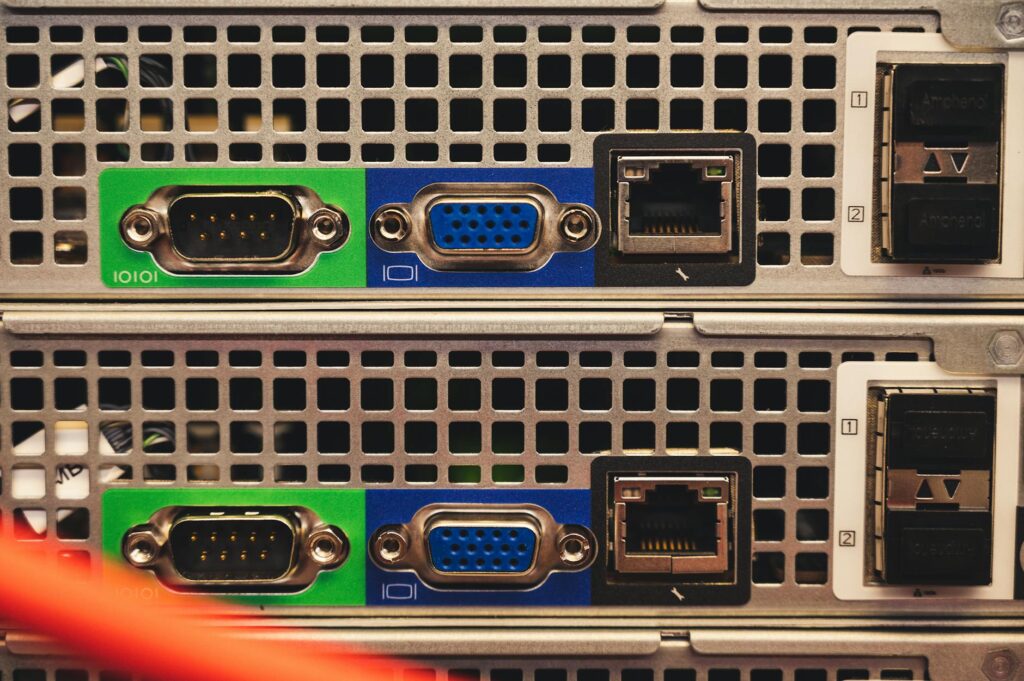
- Provision new hardware out of the box. Unpack it, rack it, cable it, configure the BIOS, install the OS. Nobody is automating that.
- Design a new network. AI can suggest a topology. It cannot understand your building layout, your growth plans, your compliance requirements, or why that one conference room always has terrible WiFi.
- Configure remote access to iDRACs and iLOs. AI can consume management interfaces once they exist. It cannot create them. Someone has to plug in, set the IP, configure the credentials, and test the out-of-band access before any automation touches it.
- Recover a switch that failed a firmware update. AI should not be running firmware updates in the first place. And when one goes wrong, someone has to plug in a rollover cable and re-flash it from a console session. That is a human with a cable, not a script.
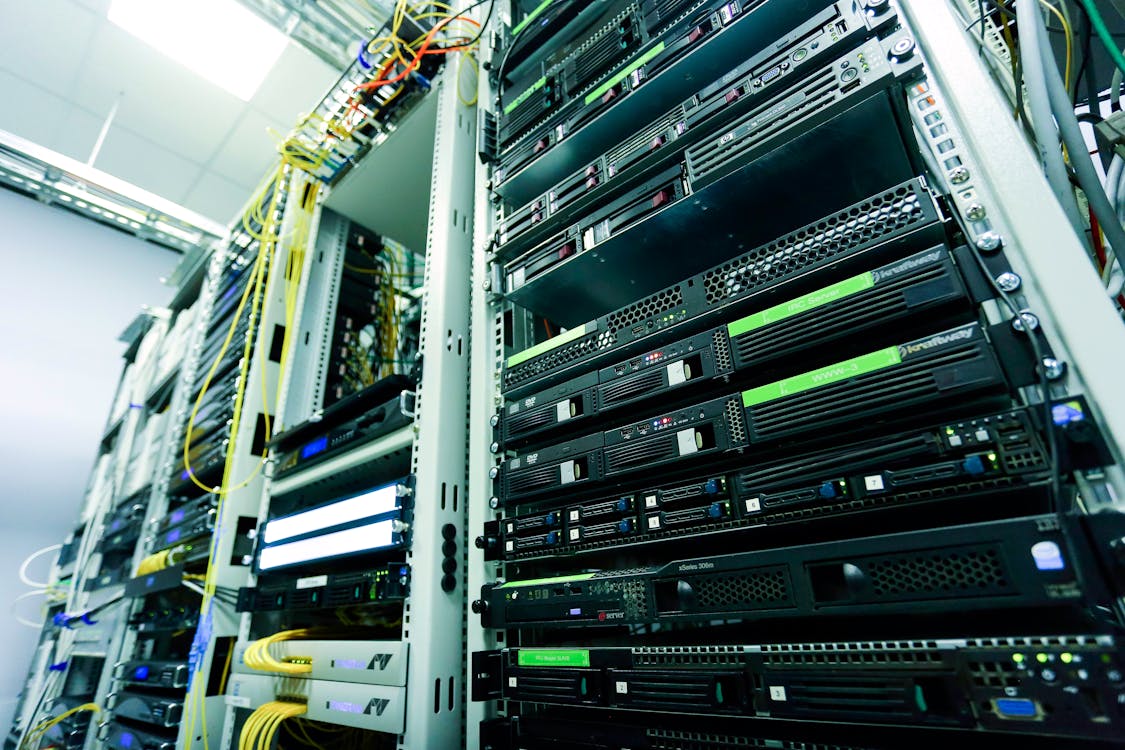
- Physically rack a server. Rails, cage nuts, power cables, network cables, labelling. Then verify the airflow, check the power draw, update the asset register. None of that is automatable.
And here is the one that sounds obvious until you watch a board member discover it in real time: AI cannot connect to anything when the network is down.
Your automated monitoring, your AI triage, your self-healing scripts, your orchestration platform. All of it depends on connectivity. When the network goes down, all of that goes down with it. And someone has to physically walk to a rack, plug in a console cable, and fix it the old-fashioned way.
Watch the penny drop for a board member shouting “why are we losing £30,000 an hour, I thought we automated IT so this would not happen.” You automated the easy part. The hard part still needs a human who knows what a rollover cable is.
There is one more. AI cannot understand the “why we do it this way” when there is little or no documentation. Every infrastructure has decisions baked into it that made sense at the time but were never written down. The firewall rule that looks wrong but exists because of a specific vendor’s broken implementation three years ago. The subnet that is too small but cannot be changed because a third-party contract hardcodes the IP range. The scheduled task that runs at 4am because it clashes with the backup window that nobody documented.
A human engineer can ask around, read between the lines, trace the dependencies, and piece together the context. AI reads the config and sees “wrong.” The engineer sees “wrong, but probably for a reason, let me find out before I change it.”
That instinct has saved more production environments than any automation tool ever will.
And ask yourself this: what is worse, a junior engineer who makes a mistake and learns from it, or a Copilot that purges a production repo in the name of efficiency? The junior you can coach. The AI will do it again tomorrow with the same confidence. And your ability to recover depends entirely on whether a human set up the backup strategy properly in the first place.
AI is excellent at consuming infrastructure that already exists. It is useless at creating it from scratch. It is completely helpless when the thing it depends on stops working. And it will confidently “fix” something that was built that way on purpose.
That depth of knowledge, that ability to work across layers from the physical to the logical, is what sets you apart now.
Not willingness. Not soft skills alone. Those still matter, but they are no longer enough on their own.
A homelab gives you that depth before you get the job
You learn what a DNS failure looks like by breaking your own DNS.
You learn what resource exhaustion does by running too many containers on a Pi with 4GB of RAM.
You learn what a misconfigured firewall rule does by locking yourself out of your own server at midnight.
Those experiences used to take years on a helpdesk to accumulate. Now you can have them in a weekend.
The candidates who walk into an interview with that kind of hands-on understanding, even at entry level, will stand out from every other applicant who just has a certification and a willingness to learn.
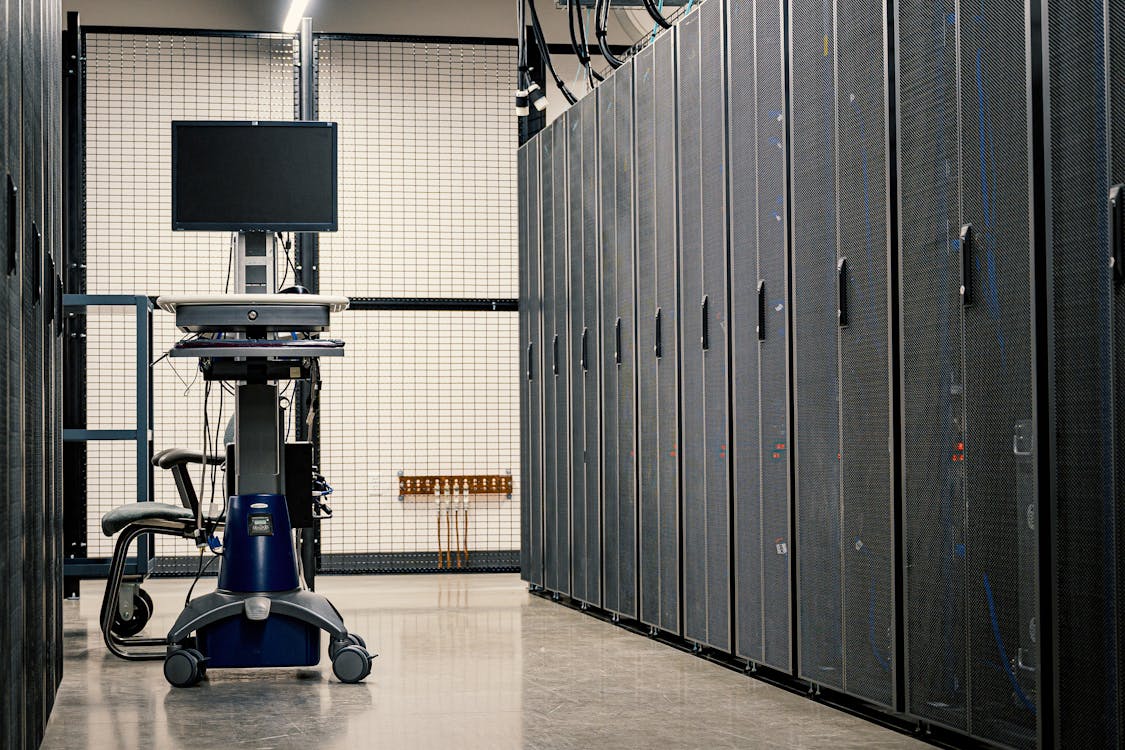
This Is Still a Human Skill
Is it really needed to run layer 3 switches and enterprise-class WiFi 7 across your house?
No. Is that cheap? Also no.
But it is fun. And it teaches you something that watching YouTube does not.
The hands-on experience of configuring, breaking, and fixing real infrastructure builds an instinct that no amount of passive learning can replicate.
What businesses actually need
Businesses need people who can reverse-engineer that proof of concept that someone built three years ago and is now somehow mission-critical.
The project nobody documented. Running on a server nobody owns. Doing something nobody fully understands but everyone depends on.
Every organisation has at least one of these.
AI struggles with that.
It can do the basics. It can streamline log analytics. It can write Ansible playbooks and Terraform code, and we use it for exactly that ourselves.
But it cannot understand business context.
It cannot look at a tangled mess of legacy infrastructure and work out why it was built that way, what it actually does, and how to safely replace it without bringing down payroll on a Friday afternoon.
That is a human skill. And it is a skill you develop by building things, breaking things, and figuring out how to put them back together.
A homelab is where you practise that without anyone’s production environment at risk.

Start Building
The training pipeline shut off. But you do not need anyone’s permission to learn anymore.
You just need a computer and curiosity.
AI is not coming for infrastructure engineers. It is coming for engineers who stopped being curious.
That is the entire philosophy behind ReadTheManual.
Start with understanding what a homelab is. Decide how to build yours. Then document what you learn.
Your future self will thank you.
Missed Part 1? Why Your Homelab Belongs on Your CV covers how to present your homelab, what to say in interviews, and which projects map to which roles.
Eric Lonsdale has spent 20+ years in infrastructure, from racking servers to architecting cloud migrations. He runs ReadTheManual to bridge enterprise and homelab skills, because the training pipeline shut off but you do not need anyone’s permission to learn.
RTFM Apparel · printed in the UK


ReadTheManual is run, written and curated by Eric Lonsdale.
Eric has over 20 years of professional experience in IT infrastructure, cloud architecture, and cybersecurity, but started with PCs long before that.
He built his first machine from parts bought off tables at the local college campus, hoping they worked. He learned on BBC Micros and Atari units in the early 90s, and has built almost every PC he’s used between 1995 and now.
From helpdesk to infrastructure architect, Eric has worked across enterprise datacentres, Azure environments, and security operations. He’s managed teams, trained engineers, and spent two decades solving the problems this site teaches you to solve.
ReadTheManual exists because Eric believes the best way to learn IT is to build things, break things, and actually read the manual. Every guide on this site runs on infrastructure he owns and maintains.
Enjoyed this guide?
New articles on Linux, homelab, cloud, and automation every 2 days. No spam, unsubscribe anytime.